Enterprise WordPress development
For organizations in Canada and the United States where the website is one system among several: data owned by another system, content at a scale nobody can manage by hand, several groups signing off, and no room for downtime during a release.
- Architecture decided and written down before any code
- Integrations against documented APIs, with logging and failure handling
- Staged environments and CI/CD pipelines for every release
- English and French built into the content model
What makes a WordPress project enterprise
The word is used loosely. What matters are the conditions behind it, because they change how a platform has to be built. A large budget can come with none of them, and a modest one with all six.
-
The data lives somewhere else
Advisors, members, products, rates or availability belong to a CRM, an internal platform or a partner. WordPress has to show them accurately without turning into a second copy that drifts.
-
Several groups have to agree
Communications, IT, legal, accessibility and a business owner all have a say. The work then needs written specifications, staged review and a record of who decided what.
-
Content beyond hand management
Thousands of records, a decade of archives, entities linked to each other. At that scale the content model is the product, and fixing a wrong one later means a migration.
-
Downtime costs money
Changes cannot go straight to production. That means environments, a build pipeline, a way back and a clear answer to who approves what.
-
Obligations come attached
Accessibility standards, privacy rules, language requirements, records retention and consent management, each with someone accountable for it.
-
It has to last for years
The platform will outlive the project and probably some of the people who specified it. Maintainability and documentation belong in the scope from the first day.
Content modelling and editorial workflow at scale
Most enterprise WordPress problems show up as editorial complaints: the site is slow to update, nobody can find anything, two teams have published different versions of the same thing. Underneath, nearly all of them are content model problems.
Entities and their relationships
Post types and taxonomies for what the organization actually manages (people, locations, programs, documents, products), with the links between them modelled instead of repeated in prose.
A curated block library
Server-rendered blocks instead of an open page builder. Editors build pages from components that already carry the right structure and accessibility, so the design system holds as the site grows.
Roles that match responsibilities
Who can publish, who can only draft, who can touch the navigation, who can edit the pages legal has reviewed. Mapped to real responsibilities rather than WordPress’s five default roles.
Previews and staging people use
A preview that shows the real page, a staging site content owners can reach, and a publishing flow that does not need a developer online.
Bulk operations and imports
At scale, editors need to move, retag and correct hundreds of records at once. If the post list is the only tool, the content decays.
Two languages in the model
English and French handled as part of the content model, with a defined link between each pair, so the two versions never drift into two separate sites.
Architecture before code
Complex platforms fail in the plan more often than in the code. The decisions that are expensive to reverse are made in the first weeks, and if nobody makes them deliberately, they get made by accident.
- The content model and the relationships in it
- An integration map with the direction and frequency of every data flow
- The environment and release plan
- Editorial roles and permissions
- What is deliberately out of scope
The written architecture is short and readable by people who are not developers. Two years later, it is what a new developer reads to understand why the platform is shaped the way it is.
It also makes a phased estimate or an RFP response meaningful, because each phase maps to decisions already made. A senior lead plans the platform and builds it with the team, and specialists join when the work needs them.
Repository         Theme, blocks and configuration
Build pipeline     Same artefacts every time
Local              Developer environment
Staging            Reviewed by your team
Approval           By the people you named
Production         Deployed by the pipeline
Release notes      What changed, what to check
Rollback           A documented procedure
WordPress and the systems you already run
On the platforms we build, WordPress usually presents and edits data that belongs to another system. In delivered work that has meant broker, office and franchise records from a client’s CRM, Google Calendar, Google Maps with geocoding, Stripe payments, weather data, Search Console, and consent and tag management.
API and system integrationsDocumented APIs over plugin stacks
A plugin for each connection grows into a dependency tangle and a security risk. We write integrations against the published API, in code that can be read and debugged.
Caching and rate limits
External requests are cached deliberately, with a plan for clearing the cache, so a slow service upstream does not make the website slow.
Failure you can see
Errors are logged with enough context to diagnose them, and the page falls back to something sensible instead of an error or an empty block.
Credentials kept out of reach
Service accounts and token exchange, with secrets in configuration and never in the database or the repository.
Releases, performance and security
Infrastructure is chosen to fit your IT constraints. We deploy to your own cloud account, to managed hosting, or to WPL Hosting, our own servers near Montréal, with your data kept in Canada. Releases go through CI/CD pipelines, with a staging copy for testing before production.
-
Everything in version control
Theme, blocks and configuration live in the repository. Nothing important exists only on the server.
-
Staging that matches production
Close enough to production to be worth testing on, and open to stakeholders without a developer’s help.
-
Automated builds and deploys
A pipeline that builds, tests and ships on a merge, so releases repeat exactly and a rollback is a known procedure.
-
Performance from the query layer
An unindexed meta query over fifty thousand records will not be rescued by a caching plugin. We work on Core Web Vitals from templates and queries up, with caching last.
-
Security as governance
Who holds an administrator account, how credentials are stored, which plugins are allowed and who approves new ones, how fast a critical patch goes in, and how recovery works. Documented at handover.
-
Multisite when it fits
Divisions, brands, regions or an English and a French site can share one codebase, design system and release process while keeping content separate. We decide this during architecture, never by default.
Planning a platform rather than a website?
Tell us what the platform has to do, which systems it talks to and who signs off. We scope in phases and estimate each one in writing, so you see what every part costs before committing to all of it.
Discuss your projectPlatforms we have delivered
-
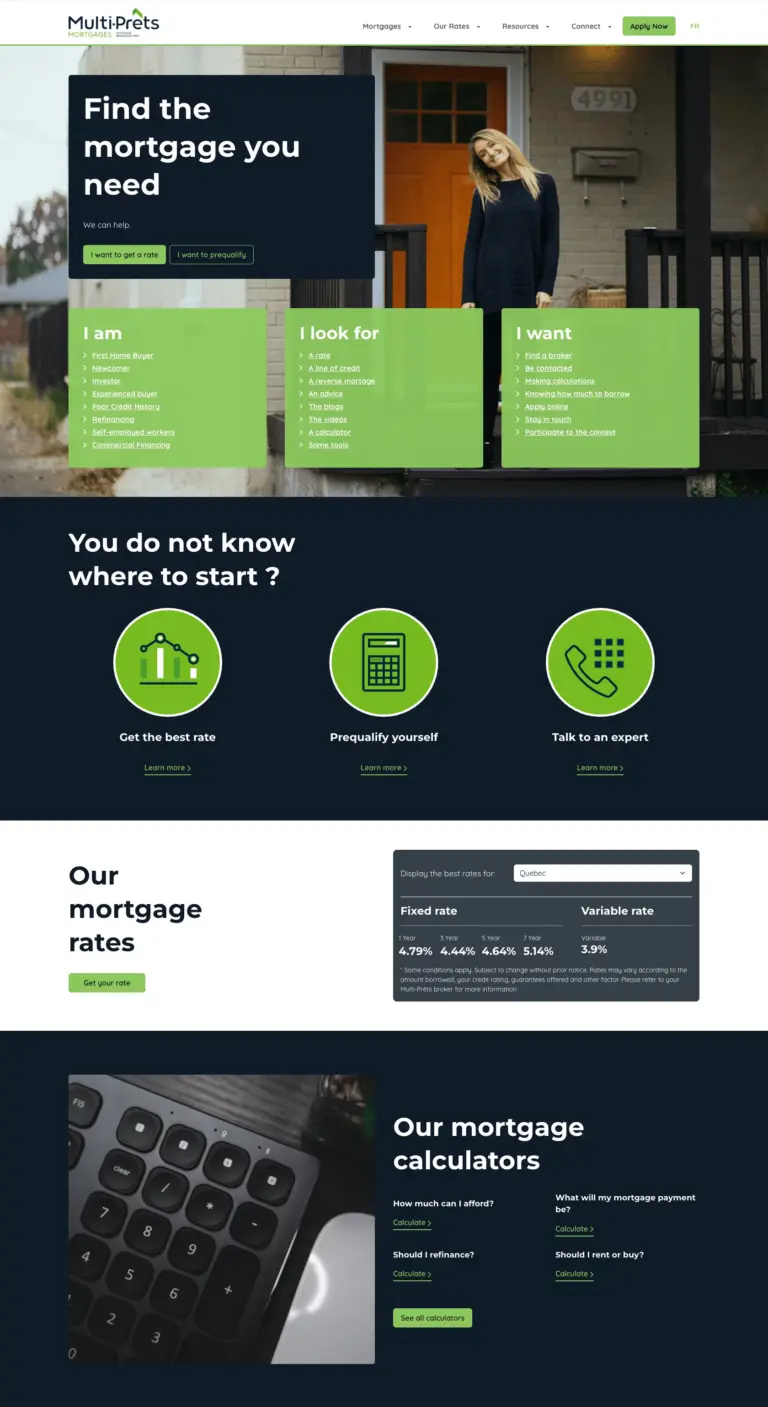
Taking over five mortgage brands from a US agency
The M3 Tech group’s five mortgage brands, taken over from a US agency at a lower cost, then developed for four years.
-
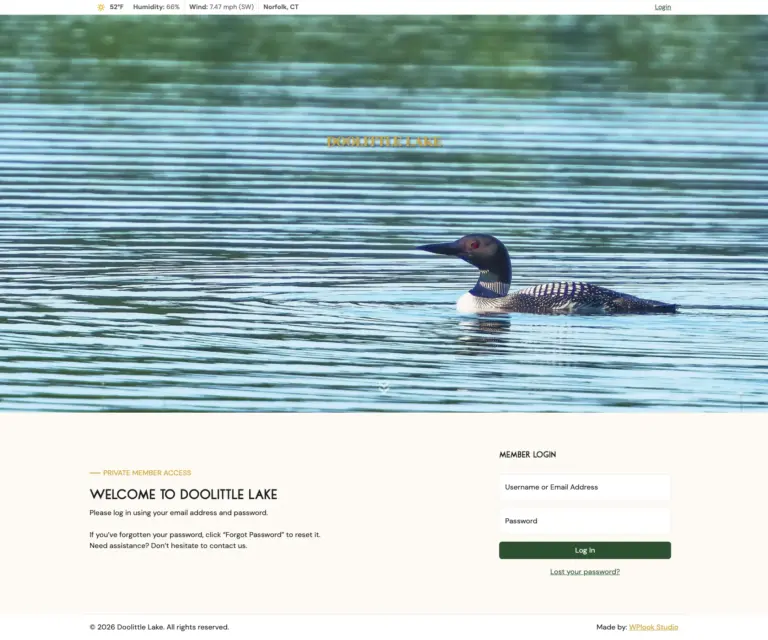
Private members portal for a lake club
Separate access for members and shareholders, secure document downloads, and navigation that follows each member’s role.
-
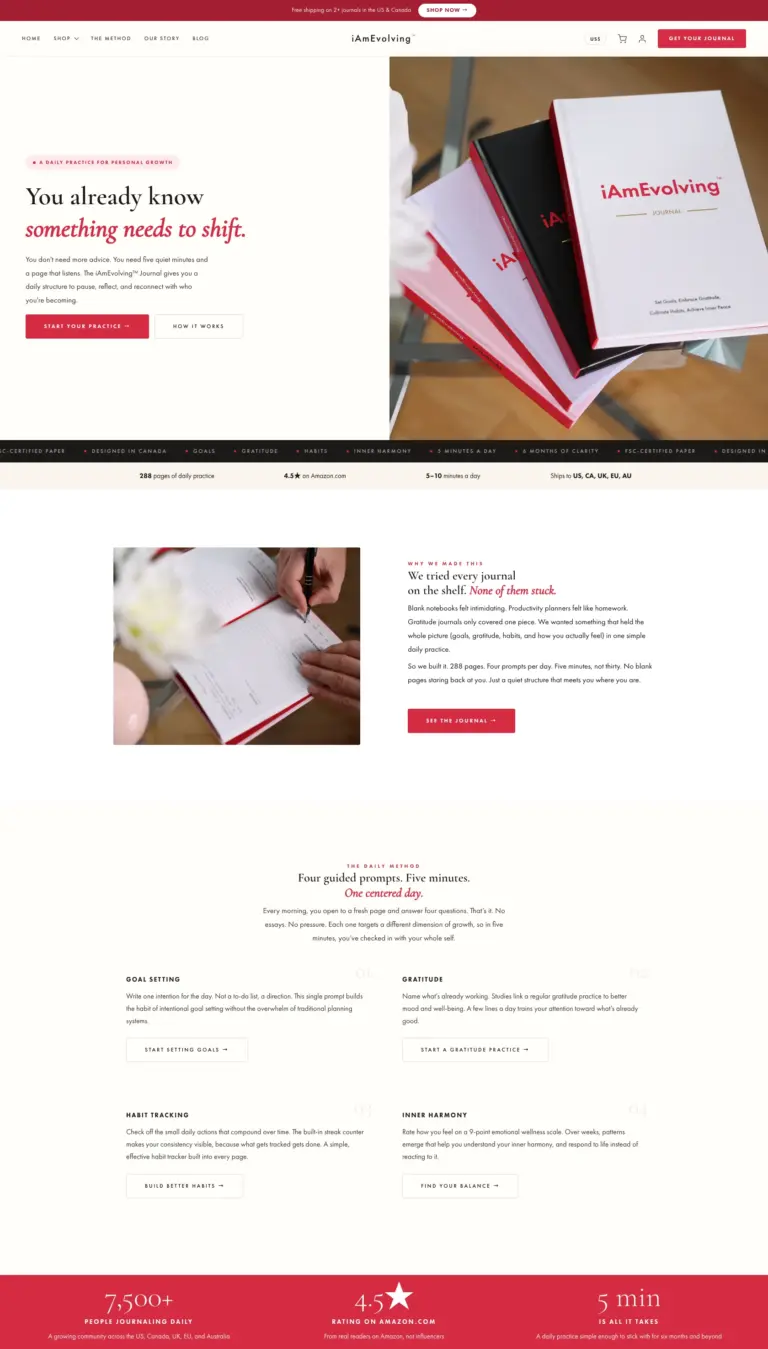
Custom platform with e-commerce and a newsletter
Its own shop, newsletter and course delivery, in a custom theme built without WooCommerce or a page builder.
Enterprise WordPress, answered
What makes a WordPress project enterprise rather than ordinary?
The conditions that change how it has to be built, more than the budget. The data that counts lives in another system, several groups have a say, the content is past what anyone can manage by hand, downtime has a cost so releases need a process, there are accessibility, privacy or language obligations, and the platform has to outlast the people who specified it.
Can WordPress handle enterprise scale?
Yes. At scale, the failures come from architecture rather than from WordPress itself. Large content sets need a content model designed for them and queries written against it, heavy integration needs caching and failure handling, and heavy traffic needs infrastructure and a caching plan. We have built and run platforms with external data integrations, bilingual content models and CI/CD pipelines.
Do you work with our internal IT department?
Routinely. In most of this work the infrastructure, the security requirements and the systems we connect to belong to the client’s IT group. We work within their constraints, document what we build for their review, and expect their sign-off on the architecture and the release process.
Can you take over a platform another agency built?
Often. It starts with an assessment of the code, the hosting, the integrations and the content model, and a frank answer about what can be maintained in place and what should be rebuilt. You get that answer before committing either way.
Do you provide the documentation an IT or procurement review requires?
Yes. Written architecture, integration and data flow documentation, accessibility and security information, the environment and release process, and a support model. They are standard deliverables in this work, and they are what an IT or procurement reviewer reads.
Should we use WordPress multisite?
Sometimes. It fits when several sites should share a codebase, a design system and a release process while keeping content and permissions separate: divisions, regions, brands or a bilingual pair. It fits badly when the sites need different architectures or their own release schedules. We make that decision during architecture, before the build.
What happens after launch?
An enterprise platform enters its longest phase at launch. We stay on as the development team for updates, security patches, monitoring, changes when an upstream API moves, performance work as content grows, and new features. If you would rather bring the work in-house or move it to another supplier, the handover is the documentation, the repository and the architecture record.
Other services we offer
- Website redesign and modernizationA new site that keeps its URLs and rankings
- Custom WordPress developmentContent models, blocks and plugins
- WooCommerce and commerceStores and custom commerce
- Gutenberg block developmentBlocks editors use on their own
- Multisite and bilingual networksSeveral sites run as one platform
- API and system integrationsConnect WordPress to your CRM and tools
- Content and data migrationMove your content without losing traffic
- AccessibilityBuilt to WCAG 2.2 AA
- TYPO3 developmentNew sites, upgrades and support for TYPO3
- AI agents and automationRepetitive work taken off your team
- Maintenance and supportUpdates, security and new features